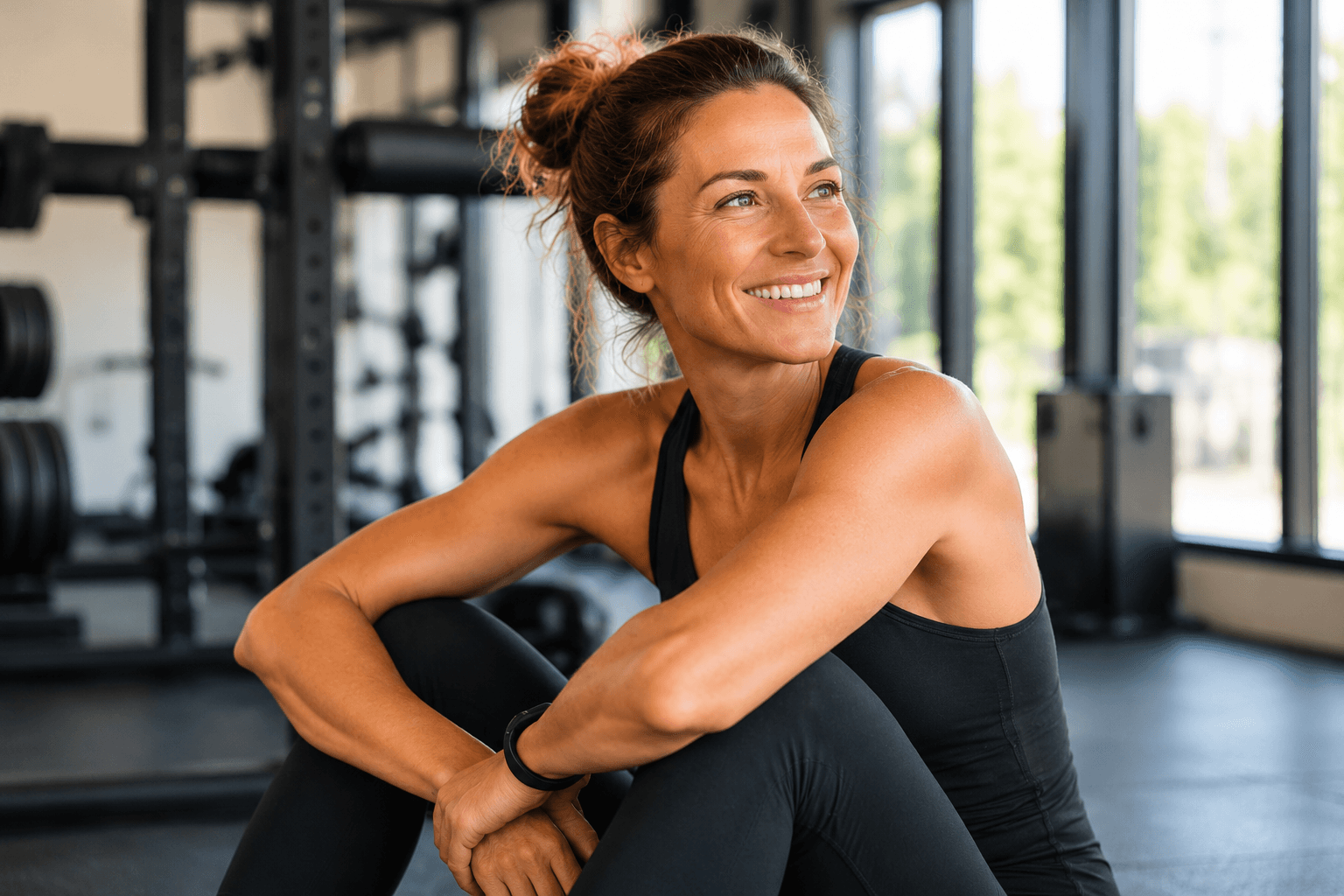
Still Sore Days After a Workout? Your Age Might Not Be the Reason.
Remember when you could push through a tough workout and feel perfectly fine the next morning? If recovery feels different in your 30s and 40s, researchers have some interesting explanations — and a few surprisingly simple solutions.
By Natalie BrooksEnergy & Performance Writer
Published 7 min read
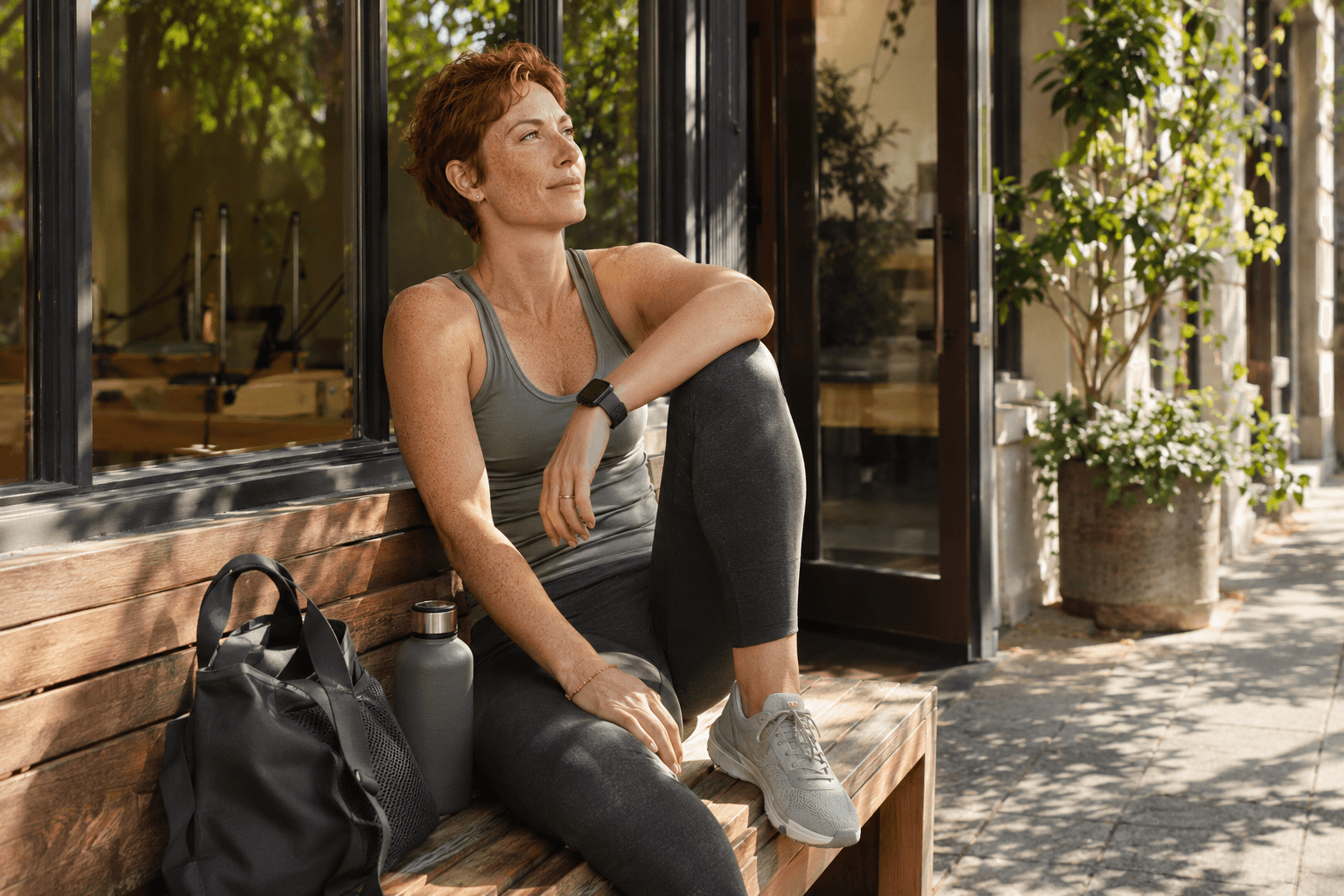
It's Wednesday morning, and your legs are still reminding you about Monday's workout.
You weren't doing anything particularly crazy.
A few squats. Some lunges. Maybe a new strength-training class you decided to try.
But now you're lowering yourself into your office chair like you've just finished a marathon.
Meanwhile, you remember being 25 and doing back-to-back workouts without giving recovery much thought.
So what's going on?
Has your body suddenly become worse at recovering?
The answer is more interesting than you might expect.
Because while aging does influence muscle function and tissue repair, some of the latest research challenges the idea that getting older automatically means taking longer to recover from exercise.
And for women in their 30s and 40s, understanding that distinction could change how you approach your workouts.
The surprising thing scientists discovered about muscle soreness
This doesn't mean aging has no effect on recovery.
A separate 2024 scientific review described age-related changes that may interfere with muscle repair, including alterations in inflammation, cellular signaling, and the body's response to resistance exercise.
And much of the research focuses on adults substantially older than 40.
Still, the results challenge a common assumption.
Feeling more sore at 38 than you did at 25 doesn't automatically mean your muscles are aging faster.
There may be several other explanations.
Your workout isn't happening in isolation
Think about everything that can change between your 20s and your 40s.
Maybe you have a more demanding job.
Maybe you're raising children.
Your sleep schedule might be less predictable.
Perhaps you're eating differently, exercising less consistently, or spending more time sitting at a desk.
And even if you're still active, your workouts may look completely different from what they did a decade ago.
All of these factors can influence how you feel afterward.
For example, if you've been taking a break from strength training and suddenly return to your old routine, your muscles are being exposed to a challenge they haven't experienced recently.
That can produce delayed-onset muscle soreness, often called DOMS.
It's especially common after unfamiliar exercises or movements that involve lengthening a muscle under tension, such as the lowering portion of a squat.
The soreness typically develops several hours after exercise and can peak around one to three days later.
And here's something important: Soreness isn't a reliable measure of how effective your workout was.
You can build strength and improve fitness without feeling sore every time you exercise.
In fact, as your body becomes accustomed to a routine, you may experience less soreness even as you continue making progress.
Sleep might be doing more work than you realize
Imagine two women completing the exact same workout.
One gets eight hours of uninterrupted sleep afterward.
The other gets six hours, wakes up twice, and spends the next morning rushing between responsibilities.
Their bodies have experienced the same physical challenge.
But their opportunities for recovery have been different.
Sleep supports numerous processes involved in maintaining physical and mental health.
It's also important for athletic performance, learning, hormonal regulation, and the body's response to training.
Research examining sleep in athletes has found that inadequate sleep can affect physical performance and overall well-being.
Although scientists are still investigating exactly how sleep restriction influences specific measures of muscle repair, consistently getting too little sleep can make exercise and everyday responsibilities feel harder.
The National Institutes of Health generally recommends seven to nine hours of sleep for adults.
And despite what you may have heard, people don't automatically need less sleep as they get older.
If recovery feels harder lately, your sleep patterns may deserve just as much attention as your exercise routine.
Then there's the hormonal piece
For women, hormonal changes can add another layer.
Estrogen plays several roles throughout the body, including influences on muscle, connective tissue, and the systems involved in physical function.
As women approach perimenopause, estrogen levels can fluctuate more unpredictably.
Some women experience sleep disturbances, changes in mood, joint discomfort, or shifts in body composition.
Those experiences can influence how comfortable and energized they feel during and after exercise.
But it's important to avoid assuming that every new ache or difficult workout is caused by hormones.
Women experience these changes differently, and research hasn't established a simple formula linking perimenopause to slower post-workout muscle recovery.
The evidence about exercise and menopause is still developing.
A 2024 overview of scientific reviews found potential benefits from certain forms of physical activity for menopausal symptoms, but the results varied considerably across studies.
Exercise remains an important part of healthy aging, even when routines need to be adjusted for changing symptoms or circumstances.
What actually helps your body recover?
If you've ever searched for recovery advice online, you've probably encountered everything from expensive supplements to ice baths and elaborate stretching routines.
Some techniques may have specific benefits.
But the strongest starting point is considerably less complicated.
Give your muscles a challenge they can adapt to
One of the most useful things you can do is exercise consistently.
Your muscles adapt when they're exposed to manageable challenges over time.
If you're returning after a break, begin with a workload that matches your current fitness level.
Increase the difficulty gradually.
And allow time between demanding sessions involving the same muscle groups.
The American College of Sports Medicine advises allowing approximately 48 hours between higher-intensity workouts targeting the same muscles.
That doesn't mean you have to spend the following day on the couch.
A gentle walk, easy cycling session, or light mobility work may fit comfortably into your routine.
The goal is to balance training with opportunities to recover.
Eat enough to support the work you're doing
Protein provides amino acids your body uses to maintain and repair muscle tissue.
And when you strength train, your body's response to protein can help support muscle adaptation.
Sports nutrition research suggests that many healthy, regularly exercising adults benefit from daily protein intakes around 1.4–2.0 grams per kilogram of body weight.
That range isn't necessary or appropriate for everyone, and individual needs vary.
Carbohydrates matter, too, especially when you're completing longer or more demanding workouts.
They help replenish glycogen, a stored form of carbohydrate your muscles use for energy.
And adequate overall food intake matters just as much as any individual nutrient.
If you're constantly training hard while eating too little, your body may struggle to keep up with the demands you're placing on it.
Protect your sleep like you protect your workouts
It's easy to schedule an hour at the gym and then sacrifice an hour of sleep to get everything else done.
But recovery deserves a place in your schedule.
Try keeping a consistent bedtime and wake-up time.
Make your bedroom comfortable, cool, and dark.
And if late caffeine or evening screen time regularly interferes with your sleep, consider changing those habits.
You don't need a perfect sleep routine.
You need one that gives your body a reasonable opportunity to rest.
Know when soreness deserves attention
Ordinary post-workout soreness usually improves over several days.
Recovery strategies are helpful for normal exercise stress.
They aren't substitutes for evaluating an injury or medical problem.
What if your body is asking for a different approach?
There can be a strange pressure to keep proving that you can do everything you did in your 20s.
The same workouts.
The same intensity.
The same ability to bounce back the next morning.
But your life at 40 probably looks different from your life at 25.
Your responsibilities may have changed. Your schedule may be fuller. And your health goals might be different, too.
Maybe you're less interested in surviving the hardest workout in the room and more interested in staying strong, energetic, and capable for the next several decades.
That's a worthwhile goal.
And the research offers an encouraging message.
Your muscles can continue adapting to exercise throughout adulthood.
You can maintain and improve strength.
You can build routines that support physical function as you age.
And you can learn to recognize the difference between a challenging workout and a training schedule that doesn't leave enough room for recovery.
Getting older doesn't mean giving up the activities you love. It means paying attention to what helps you keep doing them.
That may be one of the most valuable fitness lessons of all.
Sources
The research behind this article
- Fernandes JFT, et al. (2025). Advancing Age Is Not Associated With Greater Exercise-Induced Muscle Damage: A Systematic Review, Meta-Analysis, and Meta-Regression. Journal of Aging and Physical Activity. Read the study
- Li DCW, et al. (2024). Age-Associated Differences in Recovery from Exercise-Induced Muscle Damage. Cells. Read the review
- Hayes EJ, et al. (2023). Recovery from Resistance Exercise in Older Adults: A Systematic Scoping Review. Sports Medicine - Open. Read the review
- Walsh NP, et al. (2021). Sleep and the Athlete: Narrative Review and 2021 Expert Consensus Recommendations. British Journal of Sports Medicine. Read the research
- Jäger R, et al. (2017). International Society of Sports Nutrition Position Stand: Protein and Exercise. Journal of the International Society of Sports Nutrition. Read the guidance
- National Institutes of Health. Healthy Sleep. Read the guidance
- American College of Sports Medicine. A Road Map to Effective Muscle Recovery. Read the guide
Editorial note: This article provides general educational information and is not a substitute for individualized medical advice. Exercise tolerance and recovery vary between individuals.
- recovery
- exercise
- sleep
- protein
 Free guide
The 8-Week Plan to Lose Body Fat After 35 — And Keep It Off
A science-backed approach to sustainable fat loss for women over 35.
- Build a leaner, stronger, more defined body.
- Break the cycle of losing and regaining weight.
- Feel strong, confident, and at home in your body.
- Learn an adaptable system you can use toward a longer-term goal.